


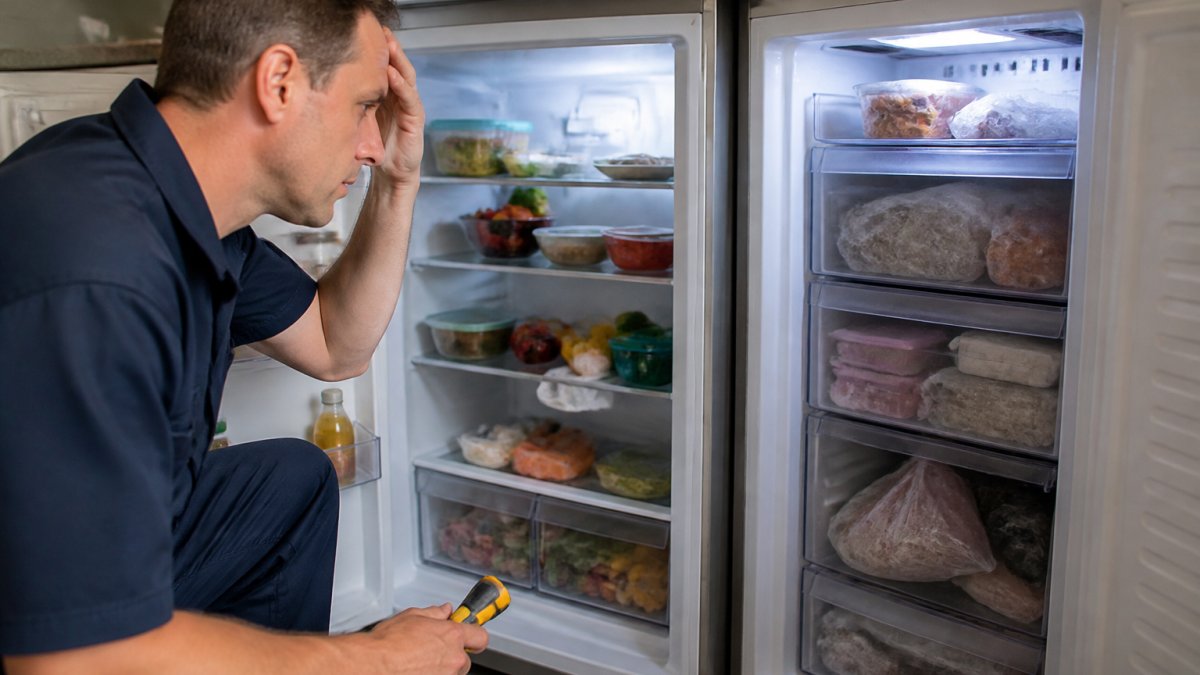
Table of Contents
- Fridge Not Cooling but Freezer Works: What's Happening
- Refrigerator Not Cooling Troubleshooting: Start Simple
- How to Reset a Refrigerator Safely
- Refrigerator Evaporator Fan Not Working: Signs and Checks
- Frost Buildup, Defrost System Failures, and the Air Damper
- Dirty Condenser Coils and Overloaded Refrigerator Habits
- When to Call a Technician for a Fridge Not Cooling
- Conclusion
- Frequently Asked Questions
Last Updated: October 21, 2026
Fridge Not Cooling but Freezer Works: What's Happening
Most guides tell you to check the compressor first, but a failed compressor usually takes the freezer down with it.
Refrigerator not cooling troubleshooting works best as a process of elimination. Start with the cheapest, simplest checks and work toward the parts that need tools.
The table below maps the symptom you're seeing to the most likely cause. Use it to skip ahead to the right section.
| Symptom | Most Likely Cause | Where to Look |
|---|---|---|
| Fridge warm, freezer fine, no fan noise | Evaporator fan motor | Evaporator Fan section |
| Fridge warm, freezer very cold, ice on back wall | Defrost system failure | Frost Buildup section |
| Fridge cool but not cold enough | Thermostat setting or thermistor | Temperature Setting section |
| Warm fridge, warm back panel, dusty coils | Dirty condenser coils | Condenser Coils section |
| Fridge warm after moving or restocking | Blocked air vents | Air Vents section |
Refrigerator Not Cooling Troubleshooting: Start Simple
Most warm-fridge calls trace back to a setting, a blocked vent, or a fridge that needs a reset. Work through these in order and stop as soon as cooling returns.
Before you start, confirm the fridge is plugged in and the breaker hasn't tripped. A fridge on a shared circuit can lose power without you noticing. The U.S. Department of Energy guide to refrigerator energy use notes that refrigerators run most efficiently between 35°F and 38°F, so keep that target in mind as you test.
Use a Decision Tree, Not Guesswork
A clear order keeps you from replacing parts you don't need. Run these in sequence:
- Power and breaker. Confirm the outlet works and the breaker is on. If the fridge light is out and the display is dead, this is your problem, not airflow.
- Temperature setting. Confirm the fridge is set near 37°F and the freezer near 0°F. A setting bumped to "off" or to a warm number explains a warm fridge with a working freezer.
- Door and gasket. Close the door on a dollar bill. If it slides out with no drag, warm air is entering and the fridge will struggle.
- Blocked vents. Clear the vent between compartments and the rear air channel.
- Reset. Power-cycle the fridge and wait a full 24 hours before judging it.
- Fan and frost. Only after the above do you open panels to check the evaporator fan and defrost system.
Stop at the first step that restores cooling. If you reach step 6 with a warm fridge and a cold freezer, the cause is almost certainly the fan, defrost, or damper.
Check the Temperature Setting and Measure It Correctly
Set the fridge to 37°F and the freezer to 0°F, then wait 24 hours before judging results, a recently restocked or left-open fridge takes time to recover.
Measure with a real thermometer, not the display. Put a glass thermometer in a cup of water on the middle shelf overnight. A display reading 37°F while the water sits at 45°F tells you the sensor or control board is misreporting.
If the reading is off by more than a few degrees, the thermostat or temperature sensor is a suspect.
Inspect for Blocked Refrigerator Air Vents
Pull the fridge away from the wall and clear anything blocking the vents inside. Cold air enters through a vent near the top or back, and a cereal box, tall milk jug, or overpacked shelf can block it completely.
Check these spots:
- The vent between freezer and fridge compartments
- The rear air channel inside the fridge
- The gap behind the bottom crisper drawers
- The space behind the fridge for the condenser
Overloading is a common cause of warm spots. Leave a few inches of clearance around every vent and don't push food flat against the back wall.
Know How Long Recovery Takes
A reset or defrost does not prove itself in five minutes. After a power cycle, leave the doors closed for a full 24 hours, especially in a warm kitchen. After a manual defrost, wait until all ice is gone, then run the fridge 24 hours before rechecking with your thermometer. If the freezer still freezes and the fridge is still warm after a full day, move to the fan and defrost checks.
How to Reset a Refrigerator Safely
Unplug the refrigerator from the wall, wait five minutes, then plug it back in. That's the whole reset, a power cycle clears a glitchy control board and restarts the cooling cycle from scratch.
Here's how to do it without causing a new problem:
- Empty the fridge of anything that spoils quickly and pack it into a cooler.
- Unplug the fridge at the outlet, not the breaker, so you can hear it power down.
- Wait a full five minutes. This lets the board discharge and reset.
- Plug it back in and listen for the compressor and fans to start.
- Leave the doors closed and give it 24 hours to reach temperature.
Don't unplug and replug in quick succession. That can trip the compressor's overload protector and make the fridge seem dead when it isn't.
How long to wait after a reset: a full 24 hours before you decide it failed.
Refrigerator Evaporator Fan Not Working: Signs and Checks
A refrigerator evaporator fan not working is the single most common reason a fridge goes warm while the freezer stays cold. The evaporator fan pushes cold air from the freezer into the fridge compartment.
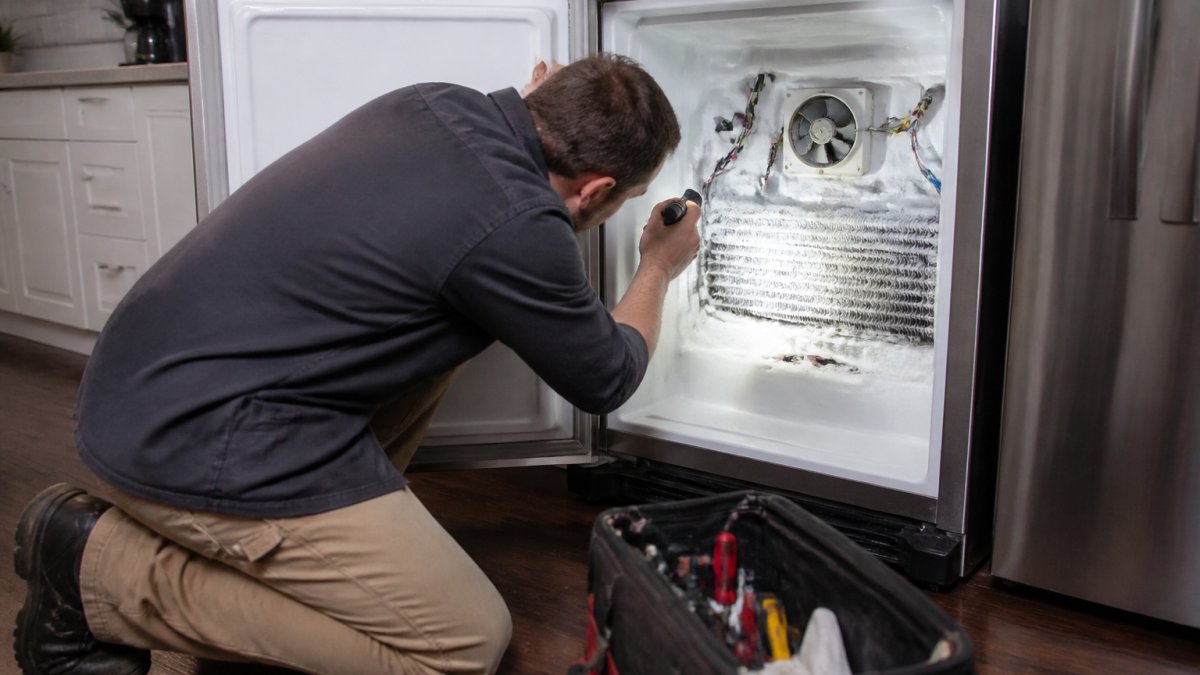
Listen for the fan. Open the freezer door and press the door switch, you should hear it running.
Signs the evaporator fan is the problem:
- Freezer is cold, fridge is warm
- No air movement when you hold your hand near the fridge vent
- Loud hum or rattle from inside the freezer
- Ice built up around the fan blades
Unplug the fridge before removing the freezer back panel. Check that the blades spin freely by hand; if stuck on ice, defrost completely and retest.
Frost Buildup, Defrost System Failures, and the Air Damper
Heavy frost on the evaporator coils blocks airflow and stops the fridge from cooling.
Look for these signs of a defrost failure:
- Thick frost or a solid ice sheet on the back wall of the freezer
- Fridge warms up, then recovers on its own, then warms again
- Water pooling under the crisper drawers
- Ice on the evaporator fan blades
A manual defrost is the fastest test. Unplug the fridge, empty it, and leave the doors open for 24 hours with towels down.
The air damper is the other suspect here. The damper control opens and closes to let cold air into the fridge. A stuck damper leaves the fridge warm while the freezer stays cold.
Dirty Condenser Coils and Overloaded Refrigerator Habits
Dirty coils trap heat, so the compressor runs longer and the fridge compartment struggles to hold temperature first.
Pull the fridge out and look at the coils on the back or underneath. A thick layer of dust, pet hair, or lint means it's time to clean.
An overloaded refrigerator causes the same symptom differently: packed shelves block air circulation, so cold air can't reach the front and top. Follow these habits:
- Leave space around the vents and back wall
- Don't block the shelf directly under the cold air inlet
- Keep the door seals clean so cold air stays in
- Let hot leftovers cool before putting them in
Check the door gaskets too. A torn seal lets warm air in and forces the fridge to run constantly. Slide a dollar bill into the door and pull it out. If it slides out easily, the seal is weak.
When to Call a Technician for a Fridge Not Cooling
Call a technician when the simple checks don't fix it, or when the repair crosses into sealed-system or electrical work. Some jobs are safe for a homeowner. Others aren't.
Do these yourself:
- Adjust the temperature setting
- Clear blocked vents
- Clean the condenser coils
- Power cycle the fridge
- Defrost a frosted unit
Leave these to a pro:
- Replacing the evaporator fan motor
- Testing or replacing the defrost heater, timer, or control board
- Diagnosing a thermistor or thermostat fault
- Any work on the sealed refrigerant system
- Chasing a wiring or control board fault
Safety Boundaries for DIY Checks
Unplug the refrigerator before removing any panel, and never test wiring or a fan motor with the unit plugged in. Line voltage at the fan and control board can shock you, and a slipped probe can short the board. Do not handle capacitors or sealed-system components; those hold a charge and require refrigerant handling that is regulated. If a repair calls for opening the sealed system, stop and call a licensed technician.
Repair or Replace?
Use the fridge's age and the cost of the likely part to decide. A fan motor, thermistor, or damper is usually a modest repair worth doing on a fridge with years left.
If the fridge still won't cool after a reset and a full defrost, the problem is likely in the fan, defrost, or control system. That's where a trained technician saves you time and money.
Food safety during a cooling failure: keep the doors closed as much as possible. A closed fridge holds cold for hours. Move milk, meat, and leftovers into a cooler with ice if the outage runs past a few hours. When in doubt, throw it out.
Conclusion
A fridge that won't cool while the freezer keeps working is usually an airflow or defrost problem, not a dead compressor. Work the checks in order: setting, vents, reset, fan, frost, coils. Most homeowners find the cause before they need a repair call.
When the diagnosis points to a fan motor, defrost part, or control board, that's our job. Repair Appliance Pro offers expert refrigerator repair with background-checked technicians, transparent diagnostic fees, and secure online payment. Contact us now to book same-day or next-day service and get your fridge cooling again.
Frequently Asked Questions
How do you reset a refrigerator that is not cooling?
Unplug the refrigerator from the wall or switch off its dedicated breaker, then wait 5 to 10 minutes before restoring power. This power cycle lets the control board and compressor reset. Plug it back in and listen for the compressor and fans to start. Give it 24 hours to reach temperature before judging results. If the fridge compartment stays warm after a full day, the problem is likely mechanical or airflow-related, and you should test the evaporator fan and vents next.
Can a blocked air vent make the refrigerator warm while the freezer stays cold?
Yes. In most models, cold air from the freezer travels into the fridge compartment through a damper and vents. If a cereal box, produce bin, or a plate pressed against the back wall covers those vents, the fridge compartment stops receiving cold air while the freezer keeps working normally. Pull the fridge away from the wall, clear the vents inside, and make sure food sits at least an inch from the rear panel. Airflow usually returns within a few hours.
How can you tell if a refrigerator evaporator fan is not working?
Open the freezer door and press the door switch to stop the light while listening for the fan. A working evaporator fan hums. If you hear nothing, or a grinding or squealing noise, the fan motor may be failing or blocked by ice. You can also feel for airflow inside the freezer. A fan that runs only intermittently or not at all often points to a bad motor, a frozen blade, or a control board issue, which usually needs a technician.
When should you call an appliance repair technician for a refrigerator that is not cooling?
Call a technician if you have reset the fridge, cleared the vents, cleaned the condenser coils, and confirmed the temperature setting, and the fridge compartment is still warm after 24 hours. Also call if you hear fan noise but feel no airflow, see heavy frost on the back wall, or the freezer starts warming too. Diagnosing a thermistor, defrost control board, or sealed system requires meters and refrigerant handling that most homeowners should not attempt.

