



Last Updated: October 25, 2026
Quick Summary
A washing machine won't spin for several key reasons: mechanical failures, drainage problems, load issues, and electrical or control board faults. Some are simple DIY fixes; others need professional help.
- Load is too heavy or unbalanced, or water hasn't drained completely, triggering a safety feature that blocks the spin cycle.
- Check the drain hose for kinks, clogs, or blockages, and clean the pump filter if water won't drain.
- Confirm the spin setting isn't set to low or off, and that the lid or door is fully closed and latched.
- A motor that hums but doesn't turn, grinding sounds, or burning smells require professional repair.
- If troubleshooting doesn't work, call a technician to prevent water damage and mold inside the washer.
Table of Contents
- Common Causes of a Washing Machine That Won't Spin
- Washing Machine Not Spinning: Load and Balance Issues
- Washing Machine Won't Drain or Spin: Drainage Problems
- Washer Not Spinning and Clothes Are Wet: Settings and Power
- Washing Machine Spin Cycle Troubleshooting: Mechanical Components
- When to Call a Professional Technician
- Getting Your Washer Fixed Today
- Frequently Asked Questions
Common Causes of a Washing Machine That Won't Spin
When your washing machine won't spin, wet clothes pile up and your laundry routine stops cold.
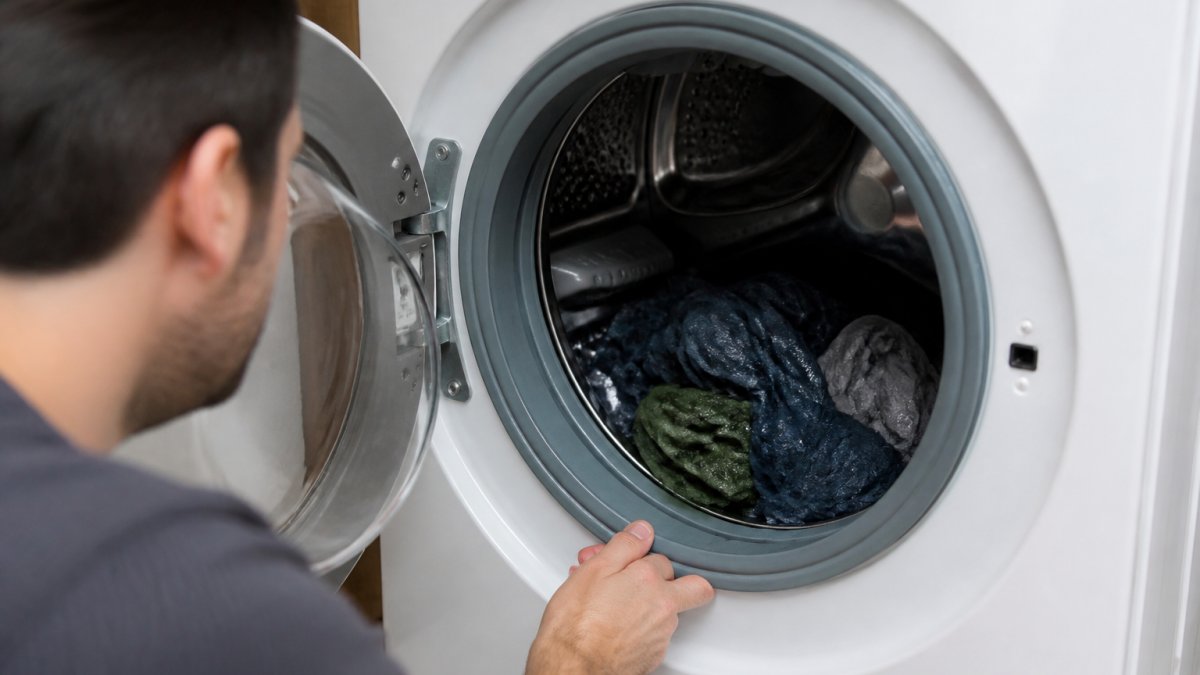
A washing machine won't spin for several key reasons: mechanical failures, drainage problems, load issues, and electrical or control board faults.
Here are the main causes to check:
- Load is too heavy or unbalanced
- Drain hose is kinked, clogged, or blocked
- Too much detergent created excess suds
Start with the easiest checks first. Many washers stop spinning because water hasn't drained completely, triggering a safety feature that blocks the spin cycle.
A washing machine stops spinning for several key reasons, each with different fixes.
| Cause | Why It Stops Spinning | Difficulty |
|---|---|---|
| Load too heavy or unbalanced | Motor senses resistance and shuts down to protect itself | Easy fix |
| Drain hose kinked, clogged, or blocked | Water trapped in tub triggers safety feature | Easy fix |
| Too much detergent | Excess suds prevent drainage | Easy fix |
| Lid or door not fully closed | Safety interlock prevents spin | Easy fix |
| Washer not level | Vibration triggers safety sensors | Easy fix |
| Motor or belt failed | No power to turn the drum | Professional repair |
| Control board malfunctioning | No start signal sent to spin circuit | Professional repair |
| Drain pump stuck or broken | Water cannot exit the tub | Professional repair |
Washing Machine Not Spinning: Load and Balance Issues
The most frequent reason a washing machine not spinning occurs is an overloaded or unbalanced drum. An overloaded washer can't move freely.
Check your load size first. Don't fill the tub past three-quarters full, clothes need room to tumble, and packing too much in makes the spin function struggle.
Unbalanced loads cause different problems.
How to fix load and balance issues:
- Open the lid or door and remove some items
- Redistribute remaining clothes evenly around the drum
- Make sure heavy items (jeans, towels) are spread out, not clumped together
For front-load washers, unbalanced loads are especially common because the horizontal drum is more sensitive to weight distribution.
Washing Machine Won't Drain or Spin: Drainage Problems
When a washing machine won't drain or spin, water is trapped inside the tub. The safety system prevents spinning when standing water is present, protecting the motor and preventing overflow.
Water stays in the tub for one reason: the drain isn't working. Check these drainage components in order:
Drain hose issues:
- Kinked or bent hose restricts water flow
- Clogged hose traps debris and lint
- Hose disconnected from the standpipe or drain
Pump filter blockage:
- Many washers have a small filter that catches lint and coins
- This filter clogs easily and stops drainage completely
- Located near the bottom front of front-load machines
Drain pump failure:
- The pump motor burns out over time
- A stuck pump won't push water out
- You'll hear humming but no water movement
Start with the drain hose. Unplug the washer, locate the hose at the back, and check for kinks or bends.
For front-load washers, check the pump filter next.
If water still won't drain, the drain pump itself may have failed. This requires professional repair.
Washer Not Spinning and Clothes Are Wet: Settings and Power
When your washer not spinning and clothes are wet, the cause is often simpler than a broken part: the machine was told not to spin, or it lost the signal to spin. Before you pull the washer away from the wall, run a symptom-led check. The pattern of failure tells you where to look.
Match the symptom to the likely cause
- No spin at all, drum never moves: lid or door not latched, control lock engaged, cycle paused, or no power to the spin phase.
- Spins slowly or hesitates: spin speed set to low, delicate or hand-wash cycle selected, or an unbalanced load derating the spin.
- Stops mid-cycle before spin: standing water in the drum (drain fault), lid opened during the cycle, or a control reset.
Check the settings first
Review the control panel before assuming a mechanical failure:
- Did you select a delicate, hand-wash, or wool cycle? Many of these use a slow final spin or skip the high-speed spin entirely.
- Is the spin-speed option set to low or off? Set it to high or normal for a test load.
- Did you press pause, add-a-garment, or stop mid-cycle? Resume or restart the cycle.
Many washers let you skip the spin cycle on purpose, useful for delicates but easy to trigger by accident. Confirm the spin setting before troubleshooting hardware.
Rule out power and control resets
If the washer lost power during a cycle, it may not resume the spin phase correctly. Unplug it or switch off the breaker for about 5 minutes, then restore power to clear a latched control state on many models. Run a short test cycle and watch whether the drum spins.
Lid, door, and lock behavior by washer type
Top-load washers: the lid switch is a safety interlock. If the lid is not fully closed, or the strike or latch is obstructed by lint or a garment, the spin will not start.
Front-load washers: the door lock motor must engage before spin. If the door will not seal, or the lock does not click, the cycle stalls before spinning.
Find and read the error code
Most modern washers store a fault code when a cycle aborts. The code is model-specific, the same letters or numbers can mean different things across brands, so look it up in your model's manual or the manufacturer's support page.
If the panel is blank or unresponsive after a reset, treat it as a power or control issue and stop there. Control-board diagnosis is not a DIY task on most models.
Washing Machine Spin Cycle Troubleshooting: Mechanical Components
If your washing machine spin cycle troubleshooting has ruled out load, drainage, settings, and power issues, the remaining suspects are mechanical or electrical, where the line between a safe DIY check and a job for a qualified technician matters most.
The parts that drive the spin are:
- Drive belt: connects the motor pulley to the drum pulley on many top-load and some front-load models. A glazed, frayed, or snapped belt lets the motor run without turning the drum.
- Motor: turns the drum. A failing motor may hum, grind, or stay silent.
- Capacitor: gives the motor the jolt it needs to start on many models. A failed capacitor often means the motor hums but does not turn, or stays completely silent.
What you can safely check yourself
With power disconnected and water shut off:
- Confirm the drum turns freely by hand (on models where the drum is accessible), a drum that will not budge points to a seized bearing or an object trapped between the tub and drum.
- Look for an obvious snapped or slipped belt if your model exposes the belt without removing major panels. Do not disassemble the cabinet to reach it.
- Check that the machine sits level and that shipping bolts (on newer front-loaders) were removed. A machine that was never unwinterized from shipping will not spin correctly.
When it needs a technician
Treat these as stop-and-call signs:
- The motor hums but the drum will not turn, and the belt looks intact, suspect the capacitor, motor, or control board.
- Grinding or metal-on-metal noise during a spin attempt, suspect bearings or something trapped in the tub.
- A burning smell, sparks, or visible wiring damage, stop using the machine.
A technician can meter the capacitor, test the motor windings, and read stored codes with model-specific diagnostics, faster and safer than trial-and-error parts swapping.
Repair or replace: how to decide
Repair cost depends on the part and the access required. A belt or lid switch is relatively low-cost; a motor, transmission, or control board is higher-cost and may approach the price of a basic new washer. Weigh these factors:
- Age of the machine: major component repairs on a washer near the end of its typical service life often do not pay back.
- Cost versus replacement: if the quoted repair is a large share of a comparable new unit's price, replacement deserves a hard look.
- Frequency of failures: a second major repair in a short window is a signal to replace rather than keep repairing.
Ask the technician for a diagnosis and written estimate before authorizing work, and whether the repair is likely to be the last one for a while.
When to Call a Professional Technician
If you've worked through the troubleshooting steps above and your washer still won't spin, it's time for professional help. Learn about professional appliance repair, installation, and maintenance services available for all major brands.
Stop troubleshooting and call a pro if you see:
- Burning smell coming from the washer
- Electrical sparks or visible damage to wiring
- Water leaking from underneath the machine
These signs point to serious electrical or mechanical failures, continuing to use the machine risks electrical shock or fire.
Consumer Reports washing machine buying guide recommends professional diagnosis for any washer that won't spin after basic troubleshooting.
At Repair Appliance Pro, we handle washer repairs for all major brands.
Professional repair costs vary by the failed part. A technician will give you a clear estimate before starting work.
Getting Your Washer Fixed Today
A washing machine that won't spin disrupts your whole routine. You've now learned the most common causes and how to check for them yourself.
If your troubleshooting didn't solve the problem, don't let it sit.
FTC guidance on appliance repair advises getting professional service when DIY fixes don't work.
Repair Appliance Pro offers professional washer repair services with background-checked technicians ready to help. We provide affordable diagnostic fees and transparent pricing.
Don't guess at what's wrong. Get a professional diagnosis and get your washer spinning again. Contact Repair Appliance Pro today to schedule your repair and restore your laundry routine.
Frequently Asked Questions
What is the most common cause of a washing machine not spinning?
Overloaded or unbalanced laundry is the leading cause. When the drum senses too much weight or detects an uneven distribution, it stops the spin cycle as a safety measure to prevent damage to the motor and drum. Check that you're not exceeding the manufacturer's recommended load capacity and redistribute clothes evenly around the drum before restarting the cycle.
Can a clogged drain prevent a washer from spinning?
Yes. If water cannot drain completely from the tub, the washer's safety system prevents spinning to avoid overflow and damage. A kinked drain hose, clogged pump filter, or blocked drain line are common culprits. Inspect the drain hose for kinks, check the pump filter for debris, and ensure your home's drain line is clear before attempting the spin cycle again.
Why are my clothes still wet after the spin cycle?
Wet clothes after spin indicate the drum either didn't spin at all or spun at reduced speed. This happens when the load is unbalanced, the spin setting is too low, excess suds are present (from too much detergent), or mechanical components like the belt or motor are failing. Start by checking your detergent amount, rebalancing the load, and confirming your cycle settings are correct.
Is it worth fixing a washing machine that won't spin?
Most spin failures are fixable and affordable. Simple fixes like rebalancing the load, clearing a drain clog, or reducing detergent cost nothing. Compare repair costs against replacement; if your washer is under 7 years old and the repair is under half the replacement price, repair is usually the better choice.
Your washing machine is one of your home's hardest-working appliances. When it stops spinning, you need it fixed fast. We're here to get you back on track with reliable, efficient service from technicians you can trust.


